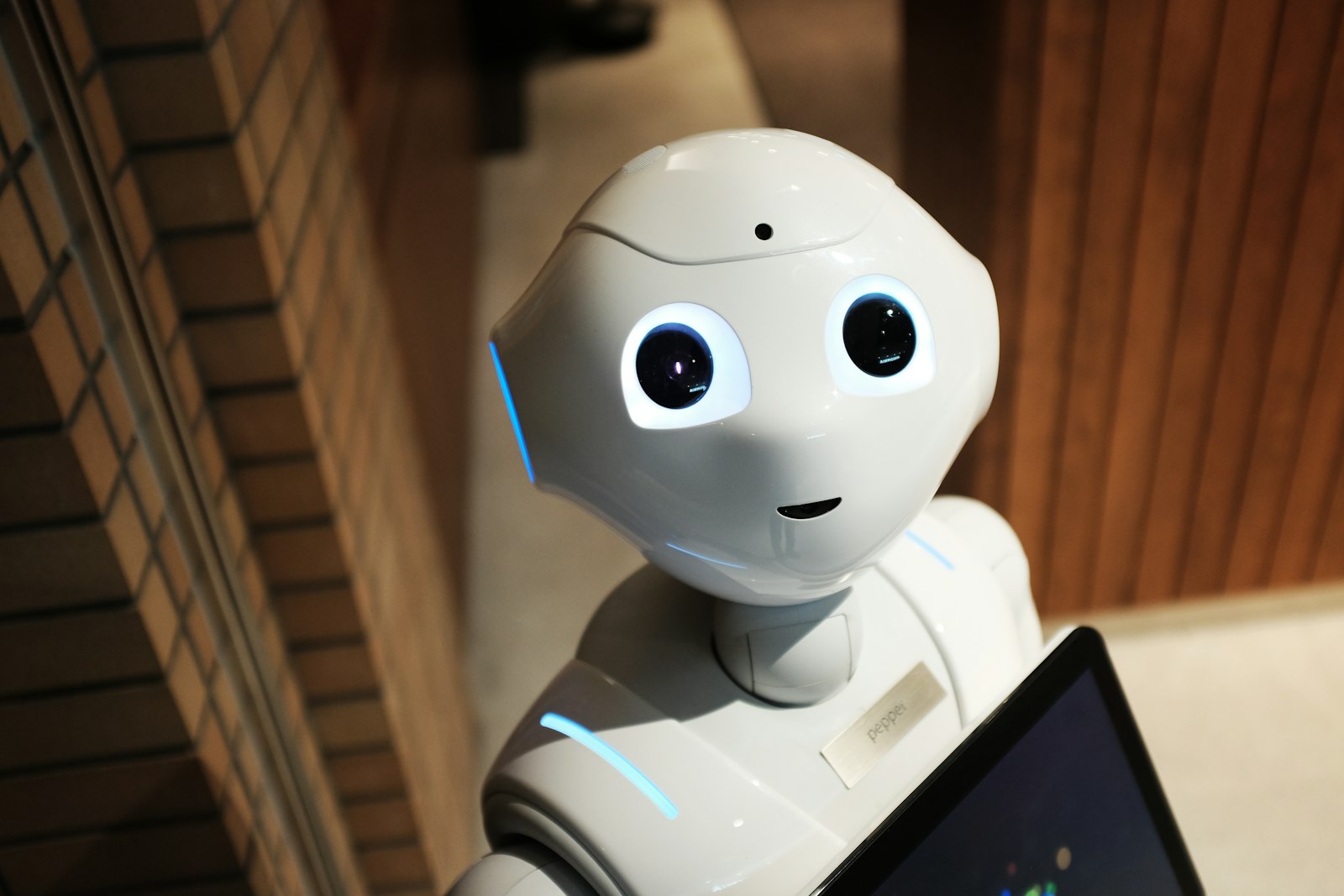
lecture / 2045
Coexistence 2045
How AI robots and people will live, work, and decide together by 2045.
Abstract
In the next twenty years we will not only build smarter machines. We will negotiate a new social contract with them. This lecture surveys the hardware, economic, ethical, and everyday dimensions of human-robot coexistence in 2045. It draws on current research in embodied AI, labor economics, assistive robotics, and governance. The argument is simple: the robots that survive will be the ones people quietly welcome into daily life, not the ones that look most like us.
1. The Convergence Moment: now through 2030
For decades humanoid robots belonged to science fiction. Around 2026 the field reached a convergence moment. Three forces met at the same time.
Hardware matured. Actuators became strong and light. Batteries improved enough for a full work shift. Tactile sensors, cameras, and lidar became cheap and small. A humanoid robot could now stand, walk, grasp, and recover from a stumble on a factory floor that was never designed for machines.
AI left the screen. Large language models gave robots reasoning in natural language. Vision-Language-Action models connected what a robot saw to what it should do. A single model could parse an instruction like “move the blue box behind the tall shelf” and generate the joint movements to do it.
Labor markets shifted. Working-age populations are declining in China, Europe, Japan, and the United States. Some projections show working-age populations falling up to 22 percent by 2050. At the same time, fewer people want to do dangerous, repetitive, or physically exhausting jobs. Robots become an economic necessity, not a luxury.
Roland Berger's 2026 study on humanoid robots estimates that the OEM market could reach $750 billion by 2035 in a baseline scenario, and $2–4 trillion by 2050 in an optimistic scenario. The same report projects operating costs as low as roughly $2 per hour at scale. Barclays' “AI Gets Physical” report frames the shift as a labor-compression phase transition. The World Economic Forum notes that the real promise of physical AI is not robots that imitate humans, but robots that help humans live more independent and meaningful lives.
The strategic split is already visible. China is deploying thousands of units for learning-by-scale, leveraging supply-chain overlap with automotive and low-altitude drones. The West is betting on AI-first approaches, foundation models, and generalization. The question is not whether humanoid robots will arrive. It is how quickly they will scale, who will control the supply chain, and what rules will govern the spaces they share with us.
2. From Digital AI to Physical AI
The robots of 2045 will be embodied agents. They will not merely process text and pixels; they will act in the physical world. The bridge is a new class of model: the Vision-Language-Action, or VLA, model. A VLA takes pixels and language as input and produces motor commands as output. This is the core technical shift from digital AI to physical AI.
Factories will be the first large-scale proving ground. Material handling, simple assembly, machine tending, logistics, and narrow warehouse tasks have clear value and bounded environments. A robot that loads a tray, moves a tote, or restocks a shelf does not need general intelligence. It needs reliability, speed, and safety.
Economics will accelerate adoption through Robot-as-a-Service. Instead of buying a $50,000 humanoid, a logistics firm will lease ten units at a daily rate that undercuts human labor. Capital expenditure becomes operating expenditure. Maintenance, updates, insurance, and fleet learning sit with the vendor. The learning curve is shared across thousands of deployed units.
There is a caveat. Robots will drop things, mishear commands, and get confused by clutter. The gap between marketing videos and real-world reliability will remain the industry's central challenge. The robots that survive will be the ones that fail gracefully and learn quickly.
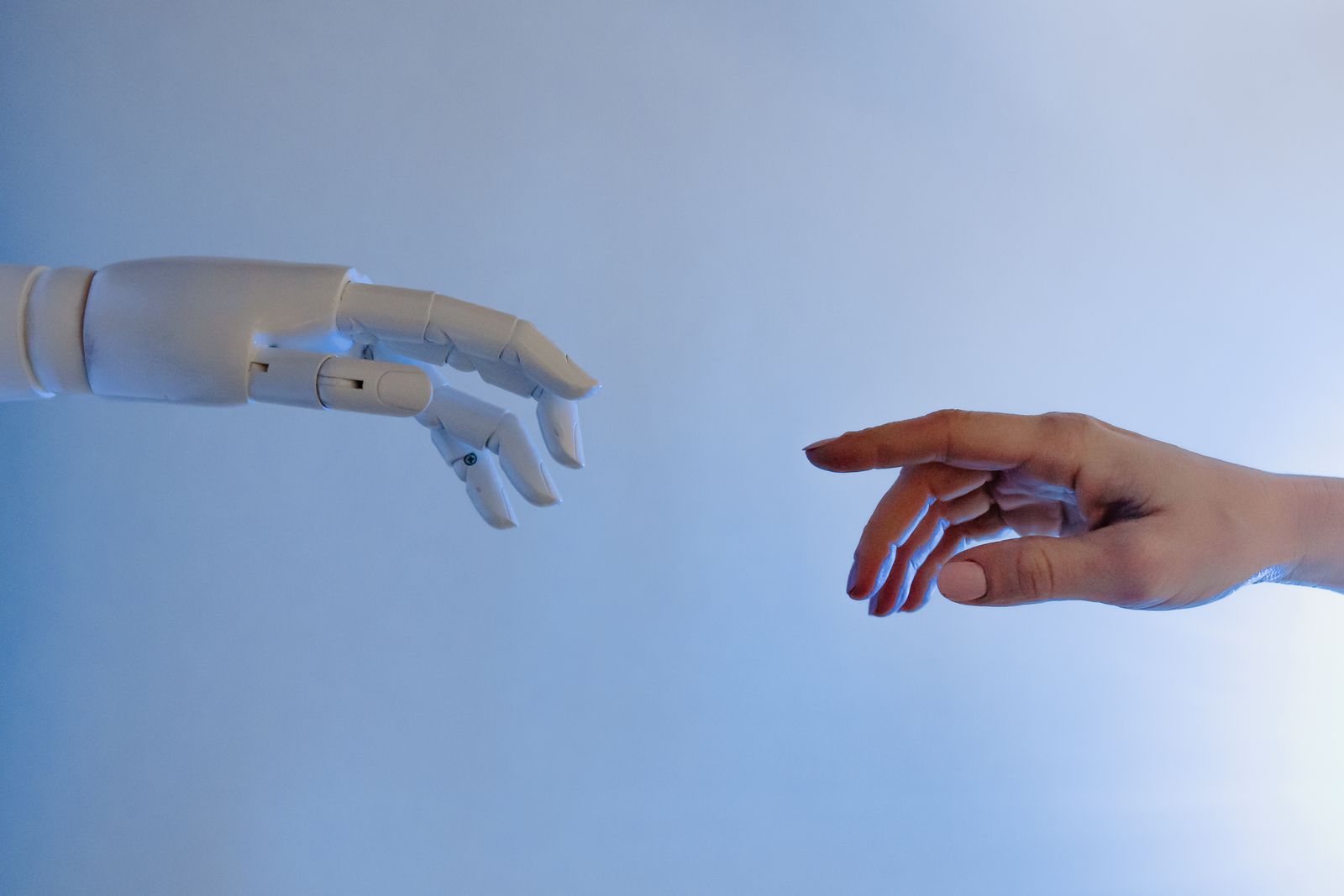
Assistive robots are judged by whether they extend human dignity, not by how human they look.
3. The Home Front: Care, Dignity, Independence
The workplace is easier for robots than the home. Factories are structured. Homes are chaotic: children, pets, clutter, visitors, and emotion. They are also uniquely intimate. That is why the home front matters most.
Assistive robotics offers the clearest value case. An aging population, a global shortage of caregivers, and the desire to age in place create urgent demand. A robot that helps someone dress, eat, take medication, or call for help can preserve independence and dignity for years. The World Economic Forum and researchers in assistive technology emphasize that the real measure of a care robot is whether it serves the user, not whether it dazzles an audience.
Co-design is essential. Robots must be built with users, not for them. A person with a disability, an older adult, or a caregiver must be in the room when behaviors, interfaces, and safety rules are defined. Technology-first design that ignores lived experience produces machines that are technically impressive and practically rejected.
Care is not only a set of tasks. It is attention, presence, and relationship. A robot that performs the mechanics of care without noticing loneliness or fear will be a poor substitute for a nurse, family member, or friend. It may even deepen isolation by reducing the incentive for human contact.
Safety is the foundation of trust in the home. One serious accident involving a home robot could slow adoption for years. Inherently safe actuation, reliable perception, predictable behavior, and graceful failure modes are not optional. They are prerequisites.
4. Workplaces in 2045
In 2045 most people will not work beside a humanoid robot. They will work with one, or supervise many. The dominant pattern will be human-robot teams: the robot does heavy, repetitive, or dangerous work; the human does judgment, creativity, empathy, and exception handling.
In manufacturing, robots will handle material handling, simple assembly, machine tending, and packaging. In logistics, they will load and unload trucks, sort parcels, and restock shelves. In agriculture, they will plant, weed, prune, and harvest at night using spectral cameras. In healthcare, they will move supplies, sterilize rooms, assist with patient transfers, and support rehabilitation.
The skill shift is profound. New roles will appear in robot fleet supervision, human-robot interaction design, robot ethics, maintenance, and training. Traditional roles in warehousing, cleaning, food preparation, and delivery may face displacement. Healthcare, construction, and logistics oversight are more likely to see augmentation. The transition will be painful for workers whose skills do not map to the new roles created.
Retraining, portable benefits, and labor-market institutions will matter as much as the robots themselves. The history of automation tells us that technology rarely destroys jobs outright. It changes them. Policy choices will determine whether the gains are shared.
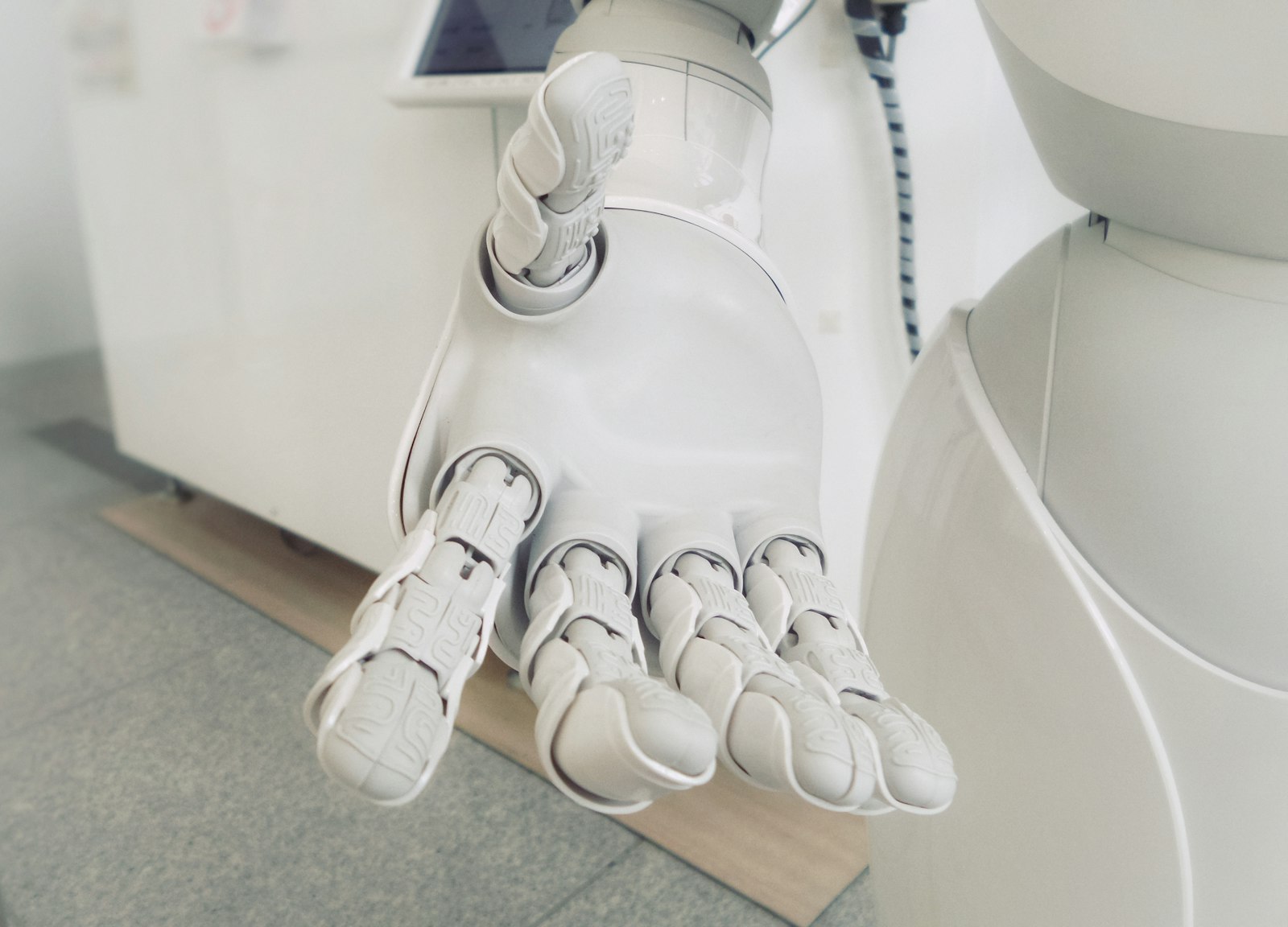
Public-space robots must fit into shared infrastructure: sidewalks, charging hubs, noise budgets, and liability rules.
5. Cities and Public Space
By 2045 robots will be visible in cities. Delivery bots will roll along sidewalks and bike lanes. Security patrols will move through office parks and transit hubs. Sanitation robots will clean streets and public restrooms. Urban farming drones will monitor crops on rooftops and vertical farms.
This layer of automation raises infrastructure questions that are more boring than the robots themselves, but no less important. Who gets priority on a shared sidewalk? Where do robots charge without blocking access? What is the acceptable noise budget for a fleet of delivery bots at night? Who carries liability when a robot collides with a pedestrian or a pet?
Cities will need charging hubs, data feeds, geofenced zones, and insurance frameworks. Some public spaces will be robot-friendly. Others, especially historic or crowded districts, will restrict them. The patchwork will feel chaotic for a decade, then become invisible as standards settle.
The design principle for public robots is the same as for home robots: they must earn trust in small moments. Stop for a child. Yield to a wheelchair. Signal intent. Stay predictable. A robot that behaves like a courteous citizen will be tolerated, even welcomed. One that behaves like an entitled machine will be regulated out of existence.
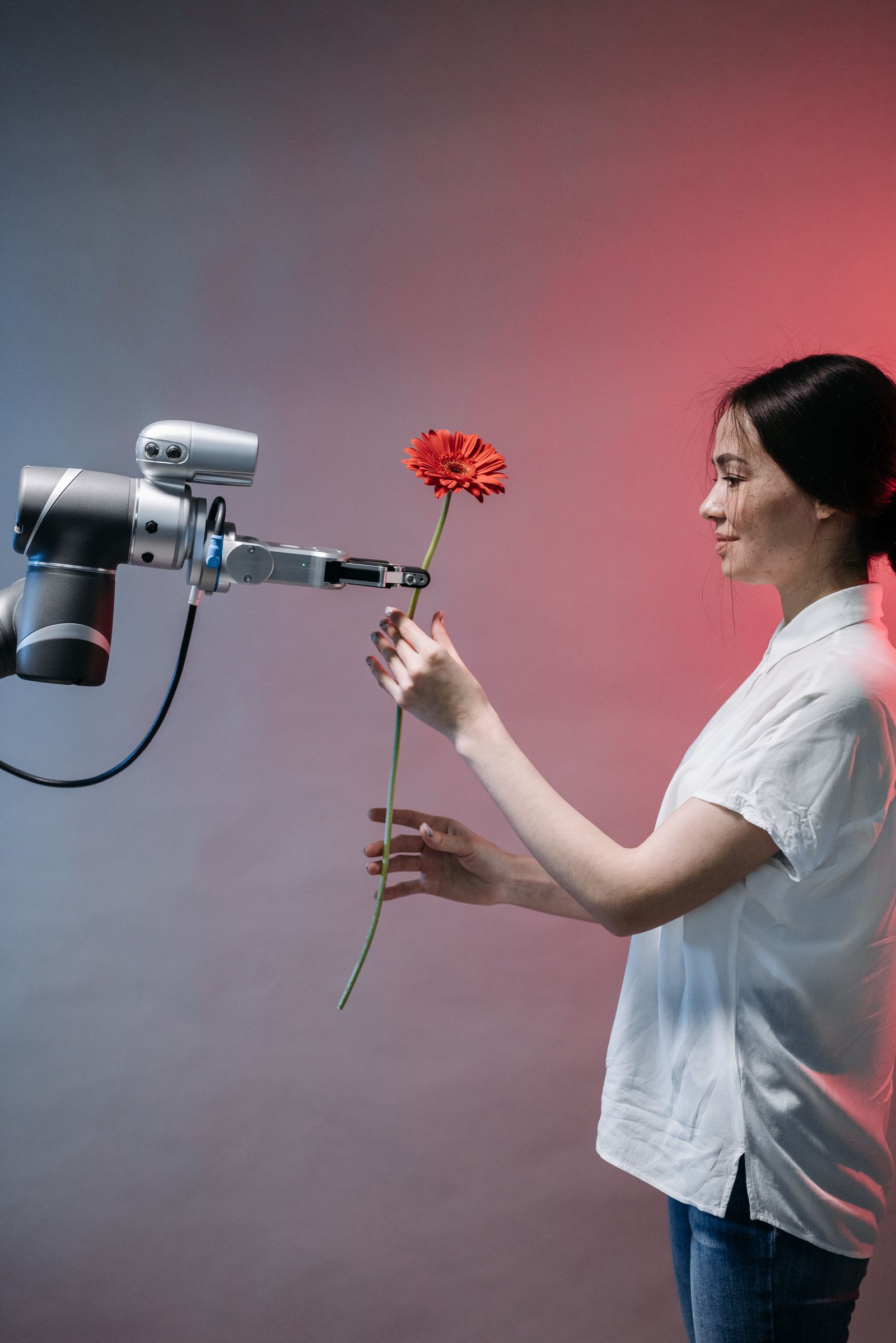
Anthropomorphism raises expectations. Tool status clarifies accountability.
6. Ethics, Rights, and Governance
As robots become more autonomous, legal and moral questions multiply. The first tension is anthropomorphism versus tool status. A robot that looks almost human invites emotional attachment and higher expectations. A robot that is clearly a machine sets clearer boundaries but may feel cold. Both choices have ethical consequences.
Responsibility is unresolved. When a robot causes harm, is the owner, operator, manufacturer, software provider, or model trainer liable? Current product liability law struggles with shared, learning systems that change after deployment. We will need new frameworks for post-deployment behavior and fleet learning.
Robot rights will be debated. In 2045 most machines will remain tools. But as some systems show adaptive social behavior, animal-welfare and environmental-law analogies will enter the conversation. The more relevant question is whether a robot is allowed to deceive a human for their own good. Truthfulness, consent, and paternalism will be central.
Bias and surveillance are unavoidable risks. Home robots record audio, video, and movement patterns. Training data from real deployments can encode bias. Local processing, encrypted storage, user ownership of data, transparent training data, and clear deletion policies will be minimum expectations.
Safety standards lag hardware. One high-profile failure can freeze adoption for years. Certification, kill-switches, fail-safe modes, cybersecurity baselines, and algorithmic impact assessments must keep pace. Ethics review boards and recall mechanisms will become normal parts of product life cycles, much like recalls for cars or medical devices today.
7. Four Scenarios for 2045
The future is not predetermined. The same hardware can lead to very different societies depending on choices about ownership, regulation, and distribution. Here are four plausible scenarios.
Augmented Society
Robots serve as teammates in factories, hospitals, and homes. Productivity gains fund retraining, shorter work weeks, and expanded care. Trust is high because design prioritizes dignity and transparency.
Fragmented Coexistence
Rich regions saturate while poor regions are left behind. Some countries ban robots outright; others race ahead without safeguards. Global standards fragment, and inequality widens.
Care-Centered World
Eldercare and healthcare dominate deployment. Human connection is preserved because assistive robots are designed to extend, not replace, caregivers. The home becomes the primary frontier.
Unchecked Rollout
Safety failures, surveillance scandals, and job losses trigger public backlash. Adoption freezes in some sectors, while a regulatory crackdown slows the whole industry for years.
These scenarios are not predictions. They are invitations to choose. The technology opens possibilities; institutions and culture decide which ones become real.
8. What We Must Decide Now
The robots of 2045 will be shaped by decisions made today. Some of those decisions are technical: better batteries, safer actuators, more reliable perception. Others are economic: who owns the data, who profits from fleet learning, and who is displaced when a task is automated.
The deepest decisions are ethical. We must design for dignity, not spectacle. We must build trust incrementally, one safe interaction at a time. We must ask not only what robots can do, but what humans lose or gain when they do it.
Global standards, transparent training data, certification, kill-switches, and accountable liability are not constraints on innovation. They are the infrastructure that lets innovation become part of daily life without breaking the social contract.
The future of robotics is human. Not because robots will become human, but because their success will be measured by what humans can do because of them.